Everybody is suddenly talking about “Skills.”
Claude Skills. OpenAI Skills. Agent Skills. MCP-powered Skills. Marketing Skills. Coding Skills.
And honestly? Most people are approaching this completely backwards.
They’re browsing giant GitHub repositories like kids walking into Costco hungry. Downloading 50 skills. Installing random collections. Watching YouTube videos with titles like “Top 100 Claude Skills You NEED RIGHT NOW!”
Then a week later they stop using all of them.
I think the better way to think about Skills is this:
Skills are not collectibles.
They are reusable expertise.
They are reusable expertise.
And once you understand that mental shift, the entire ecosystem suddenly makes sense.
This blog is going to walk through:
– What Skills actually are
– How Claude Skills and OpenAI Skills work
– Why the ecosystem feels overwhelming
– Where to find Skills
– How to evaluate them
– How experienced users actually think about Skills
– When to install one vs create your own
– Why “Skill hunting” is becoming a new form of AI leverage
– What Skills actually are
– How Claude Skills and OpenAI Skills work
– Why the ecosystem feels overwhelming
– Where to find Skills
– How to evaluate them
– How experienced users actually think about Skills
– When to install one vs create your own
– Why “Skill hunting” is becoming a new form of AI leverage
And honestly, I think this is one of the most important practical AI concepts businesses and power users should understand right now.
What Exactly Is a Skill?
At the simplest level, a Skill is a reusable capability package for an AI model.
Think of it like hiring a specialist temporarily.
Without Skills, Claude or ChatGPT are generalists.
Very smart generalists, yes. But still generalists.
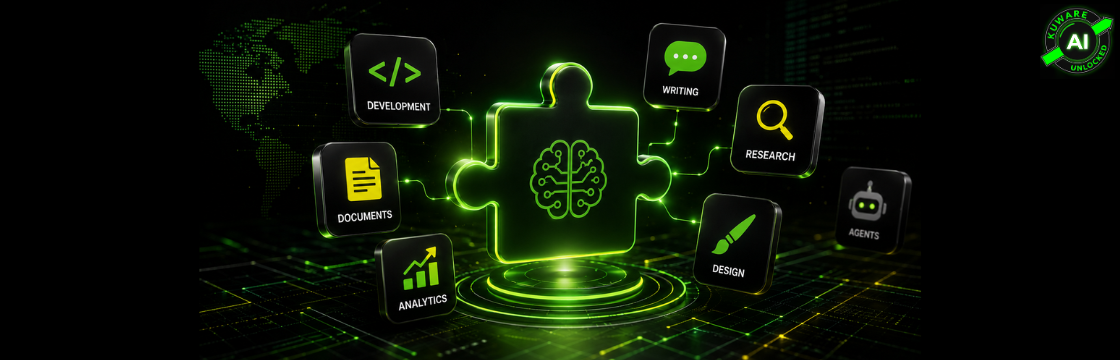
A Skill gives the model:
– specialized instructions
– workflows
– standards
– formatting rules
– domain expertise
– trigger conditions
– tools or integrations
– sometimes even mini-agent behaviors
– workflows
– standards
– formatting rules
– domain expertise
– trigger conditions
– tools or integrations
– sometimes even mini-agent behaviors
So instead of repeatedly telling Claude:
“Write this landing page using direct response copywriting principles, structure it like a high-converting SaaS page, include social proof sections, use emotional hooks…”
…you can simply use a well-designed copywriting or CRO Skill that already encodes those best practices.
That’s the key idea.
Skills compress repeated expertise into reusable modules.
Why Skills Matter So Much
The real power of AI is not just prompting well.
It’s reducing repeated cognitive overhead.
Every time you re-explain:
– your process
– your standards
– your formatting
– your workflow
– your preferred structure
– your standards
– your formatting
– your workflow
– your preferred structure
…you’re wasting mental energy.
Skills eliminate that repetition.
And that changes how AI fits into real work.
Especially for:
– developers
– marketers
– researchers
– agencies
– consultants
– analysts
– operations teams
– founders
– marketers
– researchers
– agencies
– consultants
– analysts
– operations teams
– founders
Once workflows become repeatable, Skills start becoming extremely valuable.
Claude Skills vs OpenAI Skills
Anthropic introduced Skills heavily inside Claude Code and the broader Claude ecosystem.
Claude Skills are usually folder-based packages containing:
– a SKILL.md
– instructions
– metadata
– triggers
– optional supporting files
– instructions
– metadata
– triggers
– optional supporting files
Many auto-trigger when Claude detects relevant tasks.
OpenAI has moved in a very similar direction.
Their newer Skills ecosystem increasingly overlaps conceptually with Claude’s approach:
– reusable capabilities
– modular workflows
– folder-based structures
– agentic behavior
– portable logic
– modular workflows
– folder-based structures
– agentic behavior
– portable logic
In practice, many Skills are now becoming semi-portable between ecosystems.
That’s a huge development.
It means workflows, expertise, and operational knowledge are slowly becoming transferable assets.
Where to Actually Find Skills
Official Anthropic Skills Repository:
https://github.com/anthropics/skills
https://github.com/anthropics/skills
Skills.sh:
https://skills.sh
https://skills.sh
ClaudeSkills.info:
https://claudeskills.info
https://claudeskills.info
ComposioHQ Awesome Claude Skills:
https://github.com/ComposioHQ/awesome-claude-skills
https://github.com/ComposioHQ/awesome-claude-skills
TravisVN Awesome Claude Skills:
https://github.com/travisvn/awesome-claude-skills
https://github.com/travisvn/awesome-claude-skills
Corey Haines Marketing Skills:
https://github.com/coreyhaines31/marketingskills
https://github.com/coreyhaines31/marketingskills
Alireza Rezvani Claude Skills:
https://github.com/alirezarezvani/claude-skills
https://github.com/alirezarezvani/claude-skills
This is where things confuse most people.
There are:
– official repositories
– curated repositories
– directories
– marketplaces
– community collections
– agent workflow collections
– curated repositories
– directories
– marketplaces
– community collections
– agent workflow collections
And many of the “Awesome Claude Skills” repositories are actually just curated directories that point to other creators’ work.
That distinction matters.
Agent Skills vs Regular Skills
Regular Skills are narrower and more specialized.
Examples:
– PDF processing
– SEO
– copywriting
– frontend design
– code review
– SEO
– copywriting
– frontend design
– code review
Agent Skills are more autonomous and workflow-oriented.
Examples:
– multi-step research
– orchestration
– sub-agent systems
– automated audits
– MCP integrations
– workflow pipelines
– orchestration
– sub-agent systems
– automated audits
– MCP integrations
– workflow pipelines
These behave more like operational systems than simple prompt templates.
How Experienced Users Think About Skills
Beginners think:
“What cool Skills exist?”
“What cool Skills exist?”
Experienced users think:
“What repeated expertise should I encode?”
“What repeated expertise should I encode?”
That’s a completely different mindset.
The workflow I recommend is simple:
- Start the task normally.
- Notice repetition.
- Ask yourself: “Have I explained this process before?”
- If yes, look for a Skill.
- Test ruthlessly.
- Keep only obvious winners.
This prevents both extremes:
– endless Skill hunting
– endlessly repeating yourself to AI
– endlessly repeating yourself to AI
The Repeatability Test
One-off task?
Use normal prompting.
Use normal prompting.
Repeated task?
Check for a Skill.
Check for a Skill.
Highly specialized workflow?
Probably create your own Skill.
Probably create your own Skill.
That’s basically the system.
Simple. Practical. Sustainable.
Why Most People Get Overwhelmed
There are now thousands of Skills floating around:
– SEO Skills
– copywriting Skills
– coding Skills
– AI agent Skills
– MCP Skills
– marketing collections
– automation Skills
– copywriting Skills
– coding Skills
– AI agent Skills
– MCP Skills
– marketing collections
– automation Skills
And there are often multiple versions of the same thing.
You may find:
– 12 SEO Skills
– 8 frontend Skills
– 15 code review Skills
– 8 frontend Skills
– 15 code review Skills
All with different philosophies.
Some are:
– conversion-focused
– engineering-heavy
– brand-oriented
– minimalist
– enterprise-oriented
– engineering-heavy
– brand-oriented
– minimalist
– enterprise-oriented
This is why beginners burn out quickly.
How to Evaluate Skills
Here’s the framework I recommend.
1. Trigger Precision
Does it activate correctly?
Does it activate correctly?
2. Output Quality
Does it actually improve results versus plain Claude?
Does it actually improve results versus plain Claude?
3. Specificity
Focused Skills usually outperform broad “do everything” Skills.
Focused Skills usually outperform broad “do everything” Skills.
4. Maintenance
Has it been updated recently?
Has it been updated recently?
5. Community Reputation
What are experienced users saying about it?
What are experienced users saying about it?
Most Skills honestly are mediocre.
Some are excellent.
The difference becomes obvious after testing.
Some are excellent.
The difference becomes obvious after testing.
Practical Advice: Use Grok for Discovery
This is one of the most practical workflows I now recommend.
If you don’t know whether a Skill exists already…
Go ask Grok first.
Seriously.
This is one area where Grok currently has a genuine advantage.
The Skills ecosystem changes extremely fast:
– new repositories appear constantly
– community opinions change rapidly
– trending workflows evolve weekly
– community opinions change rapidly
– trending workflows evolve weekly
Grok tends to be stronger at:
– discovering trending repositories
– surfacing current community favorites
– identifying new Skill ecosystems
– tracking what experienced users are recommending right now
– surfacing current community favorites
– identifying new Skill ecosystems
– tracking what experienced users are recommending right now
Then bring those findings back into Claude to:
– implement
– refine
– customize
– improve workflows
– refine
– customize
– improve workflows
That combination works extremely well:
Grok for freshness.
Claude for depth and implementation.
Claude for depth and implementation.
Final Thought
We’re moving toward a future where AI is not just a chatbot.
It becomes a layered operational system:
– Skills
– agents
– memory
– workflows
– MCP tools
– orchestration
– internal knowledge systems
– agents
– memory
– workflows
– MCP tools
– orchestration
– internal knowledge systems
Skills are one of the first major building blocks in that transition.
The winners won’t necessarily be the people using the biggest models.
They’ll increasingly be the people who build the best operational intelligence around those models.
And Skills are one of the earliest signs of that future already showing up.
