Category: AI (Artificial Intelligence)

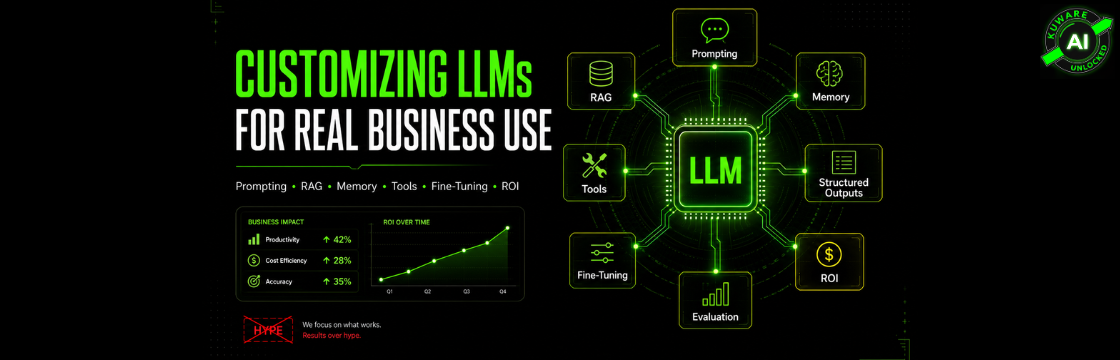
Customizing LLMs for Business Infographic

The No-Hype Guide to Customizing LLMs for Real Business Use

Businesses don’t need to train models from scratch; they need to adapt existing LLMs to their specific workflows. This guide provides a practical, no-hype framework for customization using prompting, RAG, memory, tools, structured outputs, and fine-tuning. Learn how to bridge the gap between general AI capability and reliable, high-ROI business value

Read More »
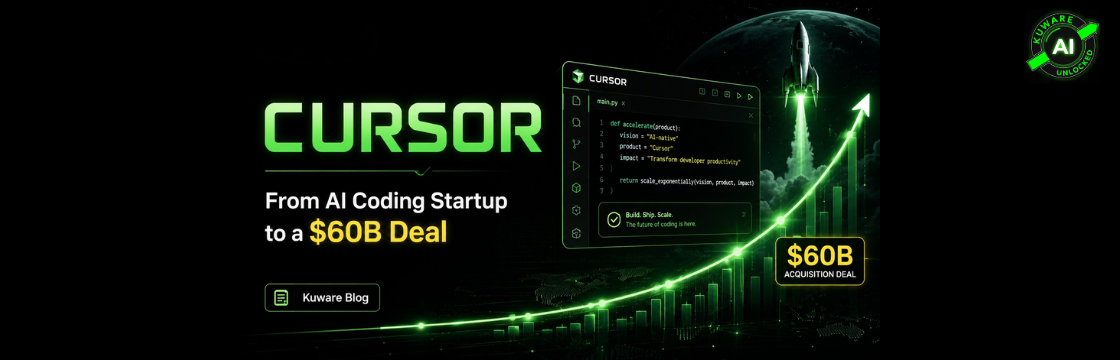
Cursor $60 Billion Lesson Infographic by Kuware

Cursor’s $60 Billion Lesson: AI-Native Products Are Rewriting Startup Math

Cursor’s reported $60 billion SpaceX acquisition marks a watershed moment for AI-native software. By integrating deeply into developer workflows rather than just adding features, Cursor demonstrated how AI can accelerate growth and reshape entire industries. For business owners, the lesson is clear: true value lies in rebuilding critical daily workflows around AI-native solutions.

Read More »
Futuristic AI model core blocked by access restriction warnings, export control symbols, and a 72-hour countdown over a global map.

Why Was Anthropic’s Fable Killed in Just 72 Hours?

Anthropic released Claude Fable 5 on June 9, 2026. By June 12, it was disabled after a U.S. export-control directive. The story is not just about one model disappearing. It is about what frontier AI has become: serious infrastructure with serious risks, serious rewards, and serious geopolitical consequences.

Read More »
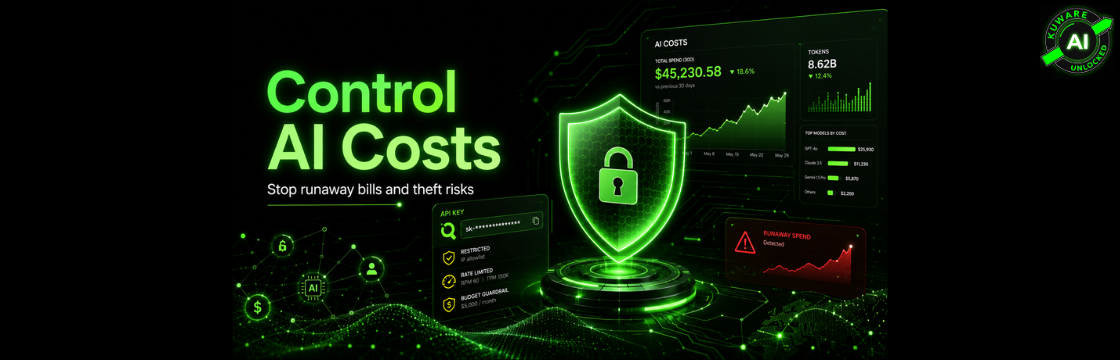
AI Cost Control Infographic by Kuware

Control AI Costs: The AI Bill Is Not the Problem. Uncontrolled AI Is.

AI costs often spiral due to stolen keys, runaway agents, and unchecked experimentation rather than legitimate business growth. To manage these expenses, implement multi-layered controls: secure API keys, establish per-user and per-tenant budgets, route tasks to cost-effective models, use prompt caching, and preprocess documents. Treat AI as a business system, not a toy.

Read More »
Custom GPT Prototype to Real AI App by Kuware

From Custom GPT to Real App: How We Turned a 2-Hour AI Workflow into a 5-Minute Process

Kuware transformed a client’s slow, inconsistent Custom GPT workflow into a scalable AI app for document generation. The original process took up to 2 hours and struggled with large data sets. By moving workflow logic into the app, improving data handling, and using a JSON-first approach, the new system now produces professional, consistent reports in under 5 minutes, handling gigabytes of data.

Read More »
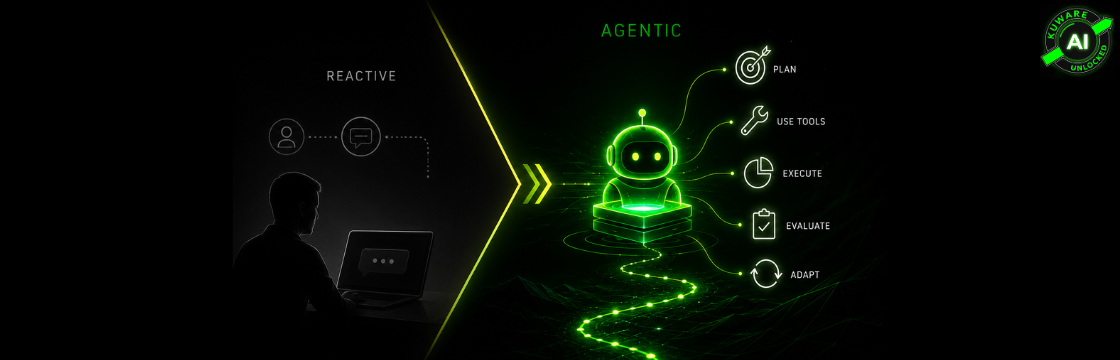
Claude Skills, OpenAI Skills & Agent Workflows Infographic

Claude Skills, OpenAI Skills & Agent Workflows: The Practical Guide for 2026

Stop approaching AI skills backwards. This guide redefines Claude, OpenAI, and Agent Skills as reusable expertise, not collectibles. Skills compress specialized instructions and domain expertise into modules, eliminating the need to repeatedly explain your workflow. Learn where to find, how to evaluate, and when to create your own Skills to build better operational intelligence around your AI models.

Read More »
Predictive Engine driving real results Infographic by Kuware

Predictive AI: The Quiet Engine Driving Real Business Results (And Why the Hybrid Approach Wins)

While Generative AI captures attention for content creation, Predictive AI quietly drives measurable business ROI through forecasts, rankings, and risk analysis using models like XGBoost. Predictive AI is often self-hosted, offering control over cost and privacy. The future belongs to hybrid systems, where predictive AI serves as the decision engine and Generative AI acts as the explanation and communication layer, leading to the highest-value AI outcomes.

Read More »
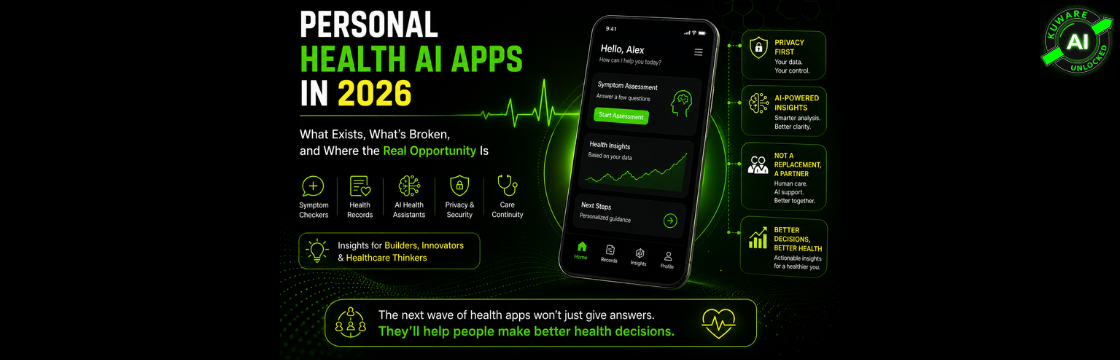
Personal Health AI Apps infographic by Kuware AI

Personal Health AI Apps in 2026: What Exists, What’s Broken, and Where the Real Opportunity Is

AI has become the first stop in healthcare, with apps ranging from symptom checkers (Ada, Buoy) to Big Tech platforms (ChatGPT, Amazon Health AI). Yet, current solutions are incomplete. Key gaps include weak input quality, missing multimodal tracking, privacy issues, and lack of continuity. The true opportunity is building a new generation of health decision tools that prioritize smarter intake, clear triage, and continuous patient tracking over merely answering questions.

Read More »